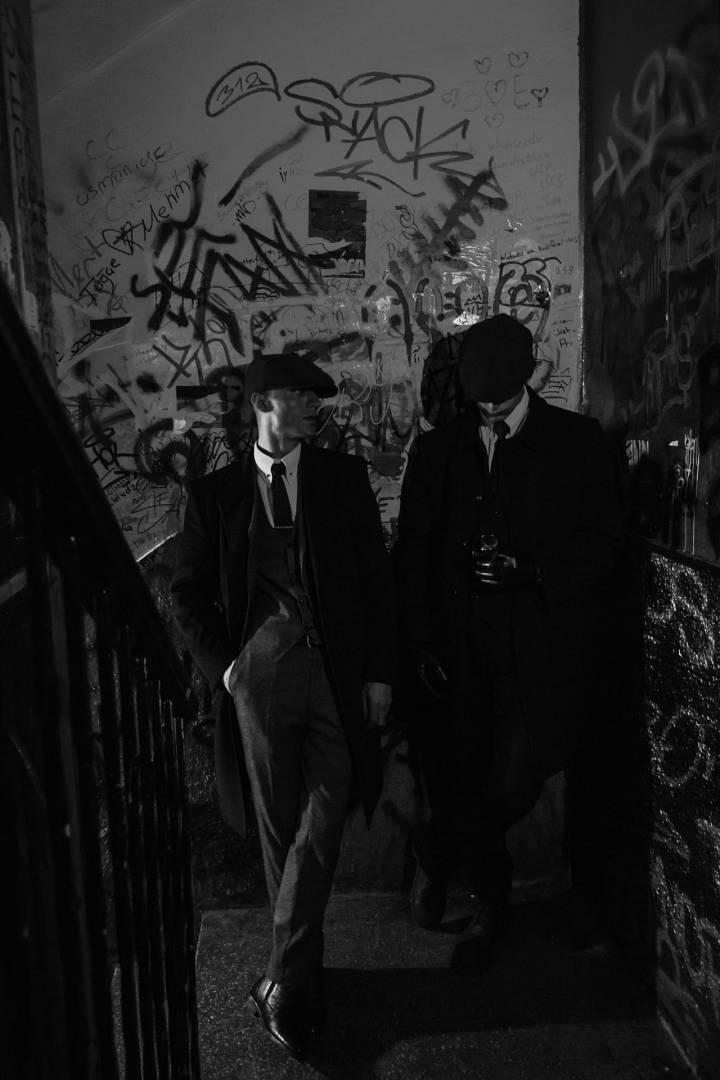

The release of Peaky Blinders the Immortal Man has put Tommy Shelby and his wardrobe back in front of a large audience. The film moves the story into 1940, so the clothes do not simply repeat the suits seen in the early episodes. The familiar flat caps, long coats and structured tailoring remain, but the later setting brings a darker and more restrained version of the look.
That shift is useful for anyone interested in wearing the style away from the screen. Copying a character from head to toe can make an outfit feel like fancy dress. Taking the proportions, texture and layering from the period gives a more convincing result. It also makes the clothes suitable for weddings, race days, dinners and other occasions where a well-cut suit feels appropriate.
The screen look now covers more than one decade
The original television series began in Birmingham in 1919. Its early wardrobe was built around heavy three-piece suits, detachable or rounded collars, overcoats, sturdy boots and newsboy caps. By the time of the new film, the story has reached the Second World War. Men’s tailoring had moved towards stronger shoulders, cleaner lines and a more sober overall appearance.
This broader timeline gives modern wearers more freedom. A collection of Peaky Blinders Clothing can include recognisable 1920s pieces without requiring every item to come from exactly the same period. A herringbone waistcoat, plain wool trousers and a dark overcoat may carry the reference more subtly than a complete checked suit with every possible accessory.
The change also explains why the style has lasted beyond the original series. It is based on familiar British menswear rather than a single costume. Tweed, wool, leather boots and structured coats existed before the Shelby family appeared on television and remain easy to understand today.
Texture does more work than decoration
The strongest Peaky Blinders outfits rarely depend on bright colour. Their interest comes from cloth. Herringbone creates a broken zigzag at close range, Donegal-style fabrics contain small flecks, and checks introduce contrast without needing a loud shirt or tie. These surfaces are especially effective during the colder months, when heavier clothing looks natural rather than forced.
For a modern outfit, one textured piece may be enough. A brown herringbone jacket can sit over plain charcoal trousers. A checked waistcoat can add detail beneath a navy jacket. If the entire suit already has a strong pattern, the shirt and tie should usually be quieter. This keeps the eye on the tailoring and avoids turning several period references into a themed outfit.
Colour should follow the same principle. Charcoal, tobacco brown, olive, navy and mid-grey all belong comfortably within the look. They also combine easily with clothes that many men already own. That matters if the suit is expected to appear at more than one event.
The modern fit should still allow movement
Period-inspired tailoring should have shape, but it does not need to be extremely tight. A jacket should close without pulling across the buttons. The shoulder seam should finish close to the edge of the natural shoulder, and the collar should sit against the shirt rather than lifting away at the back.
Trousers are central to the silhouette. A slightly higher rise works well with a waistcoat because it reduces the strip of shirt that can appear between the trouser waistband and the bottom of the waistcoat. The trousers can taper, but they should not grip the calf or bunch heavily over the shoe. The aim is a clean line, not the narrowest possible cut.
A waistcoat should cover the waistband while allowing the wearer to sit comfortably. Leaving the bottom button undone is the conventional choice on a single-breasted waistcoat. Small alterations to the trouser waist, sleeve length or jacket shape can make a ready-to-wear suit appear much more considered.
Accessories need a clear reason to be there
The flat cap is the most obvious reference to the series, which also makes it the easiest item to overuse. It works naturally outdoors with a tweed suit or overcoat. At a wedding ceremony or formal dinner, removing it indoors keeps the outfit respectful and lets the tailoring stand on its own.
Pocket watches, collar bars, tie pins and braces can all fit the period, but wearing them together may look staged. Choose one detail that suits the occasion. A pocket watch can make sense for a groom in a three-piece suit. A simple knitted tie may be enough for a race day. Leather brogues or lace-up boots often provide all the historical weight needed for a less formal event.
Shirt choice can bring the outfit into the present. A white penny-collar shirt is recognisable, while a pale blue or cream shirt feels softer. For a relaxed evening, an open collar can work if the rest of the outfit remains tidy. The suit should not have to rely on props to explain itself.
Why the style continues to work in 2026
Fashion often returns through individual shapes rather than exact reproductions. Wider trousers, substantial outerwear and textured tailoring have all made room for clothes with more weight and character. Peaky Blinders style fits that direction because it offers a clear alternative to thin, shiny formalwear.
TruClothing’s range covers suits, waistcoats, shirts, caps, footwear and accessories, so shoppers can decide how strongly they want to reference the screen look. The most wearable outfits usually stop before every element matches. A good suit, properly fitted, will still work when the cap and pocket watch are left at home.
The new film may have returned the Shelby wardrobe to public attention, but the clothes do not depend on a current release to remain useful. Their appeal comes from texture, proportion and practical layers. Those are ordinary menswear choices, even when their inspiration comes from an extraordinary fictional family.